When the sun set on the eighteenth day of the Kurukshetra war, the battle had claimed hundreds of thousands of souls. In blind grief and vengeance for his fallen father Dronacharya, Ashwatthama unleashed the forbidden Brahmashira Astra in the dark of night.
The universal creator Krishna stood before him. With a divine decree that sent shivers across the cosmos, Krishna withdrew the sacred protective gem (Mani) from Ashwatthama’s forehead, leaving a gaping wound that would bleed forever.
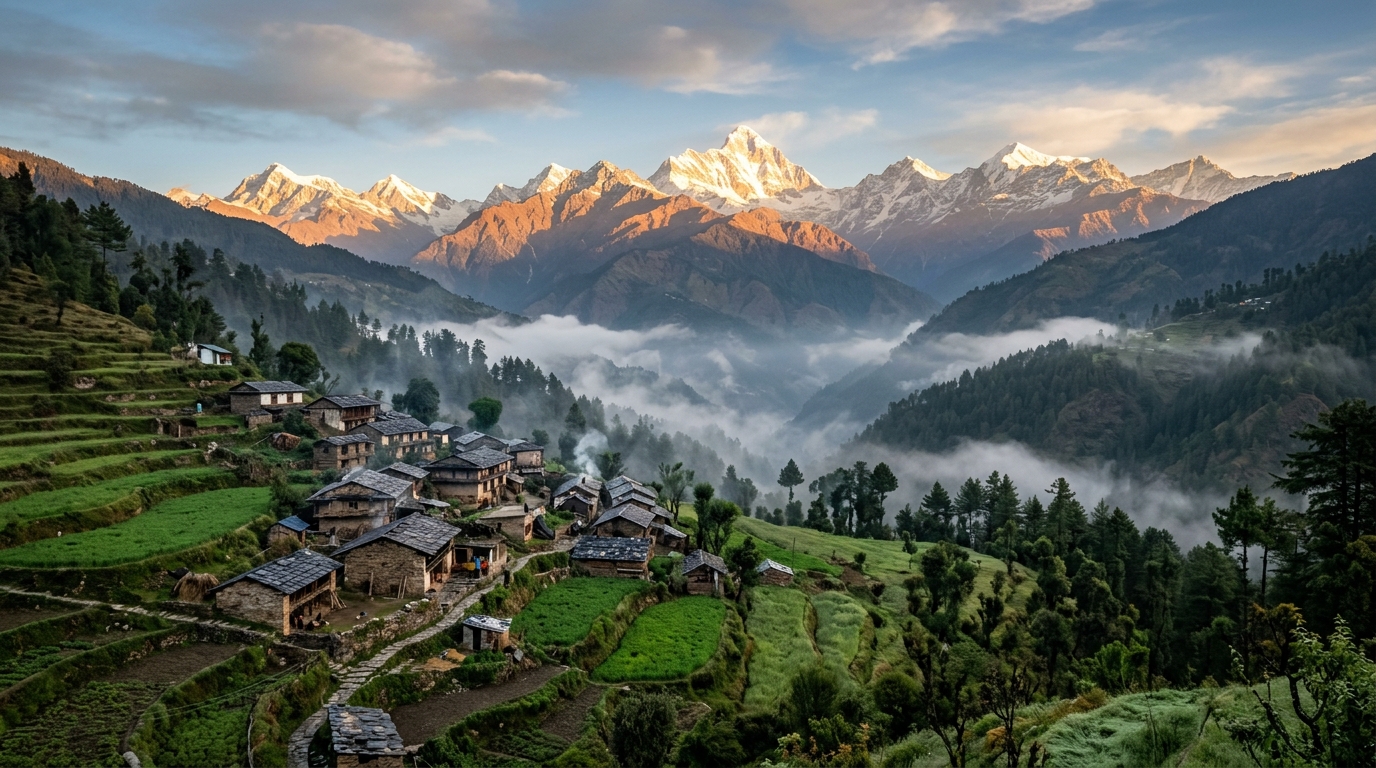
Across Uttarakhand’s high alpine meadows—from the snow-dusted ridges of Asirgarh to the remote cedar forests of Chamoli and Jaunsar-Bawar—generations of local shepherds (Bugyal Gujjars) tell strikingly consistent accounts.
Late at night, when the deodar mist rolls through the valleys, travellers report encountering a figure of towering height, wrapped in coarse wool, his forehead swathed in ancient cloth. He asks for only two things: water from holy mountain confluences and mustard oil to soothe the eternal burning in his crown.
Whether interpreted as living history or enduring cultural archetype, the folklore of Ashwatthama serves a profound spiritual purpose in the Himalayan heartland: reminding every generation of the ultimate consequences of vengeance and the sanctity of cosmic order.